


Introduction
As online commerce grows, selling honey through marketplaces is becoming more common. It can help beekeepers reach more customers, sell without renting a shop and work flexibly.
How do you get started? What documents are needed, and what makes a good product listing? This article gives a step-by-step introduction to selling honey online.
Step 1: Choose a marketplace
Before registering, choose a platform suited to your business and confirm that it accepts your products and seller location.
📌 Examples of platforms to research:
✔ OZON, Wildberries and Yandex Market - large audiences and marketplace logistics, subject to their current terms.
✔ AliExpress, eBay and Amazon - examples to investigate for international sales, depending on food and cross-border policies.
✔ Specialist and regional platforms such as Etsy, Avito and LavkaLavka - check current availability, food policies and suitability for farm products.
💡 Tip: compare each platform’s fees, logistics and packaging requirements.
Step 2: Registration and legal requirements
Requirements differ by country and platform. Before selling honey, check the following:
✅ Register under an accepted status, such as self-employed, sole trader or a company, where eligible for the product category and platform.
✅ Prepare the required quality and compliance documents for the marketplace and destination market.
✅ Arrange a business payment account where required to receive payments.
📜 Important: Russia uses the Mercury veterinary-document system for controlled goods. Check whether your honey and transaction require veterinary documents; this Russia-specific system does not replace the rules of other countries.
Step 3: Create a product listing
The listing is often the first thing a buyer sees. Pay attention to:
🔹 Title: “Natural linden honey, 500 g - farm-produced, no additives”, if those details are accurate.
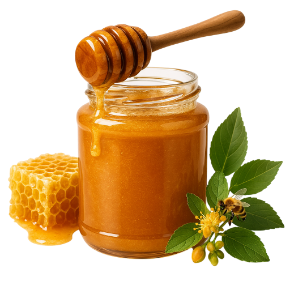
🔹 Photos: clear images of the honey, packaging and a spoonful of honey.
🔹 Description:
✔ Origin - for example, “Harvested in an environmentally clean area”, if documented.
✔ Ingredients - “100% natural honey without adulteration”, where accurate.
✔ Qualities - describe the real aroma and composition; avoid calling honey sugar-free.
✔ Storage - for example, “Up to +20°C, away from direct sunlight”.
💡 Tip: use relevant SEO keywords such as “natural honey”, “pure honey” and “farm honey” to help the listing appear in search.
Step 4: Packaging and delivery
Marketplaces set strict packaging requirements, especially for liquid products.
✅ Glass jar with protective packaging to help prevent impact damage.
✅ Plastic container for lighter shipping; check food-contact and storage suitability.
✅ A sealed lid to prevent leaks.
✅ Cardboard box with filler for protection in transit.
🚚 Which fulfilment model?
✔ FBO (Fulfilment by Operator) - the marketplace stores the goods and organises delivery.
✔ FBS (Fulfilment by Seller) - you keep the stock and use the marketplace’s delivery service.
💡 Tip: beginners may find FBS convenient because they keep stock themselves; compare the current tariffs and obligations before choosing.
Step 5: Promotion and first sales
Sales depend on promotion as well as honey quality.
✅ Introductory discounts can help attract initial buyers.
✅ Marketplace advertising can improve listing visibility.
✅ Social media - introduce your honey on Instagram or Telegram.
✅ Reviews and ratings - encourage honest customer reviews to build trust.
📊 A practical point: Products with strong ratings and genuine reviews can inspire more confidence; no fixed sales uplift is guaranteed.
Conclusion
Marketplace selling can help honey reach a wider audience. Success depends on accurate listings, suitable packaging and thoughtful promotion. These steps can help you build an online honey business.
📢 Have you sold honey online? Which marketplaces do you prefer? Share your experience in the comments! 🐝🍯