





Vinegar is found in almost every home. It is added to salads, used for preserving cucumbers and tomatoes, and sometimes used “for health”. Yet products called vinegar can differ in composition and effects even when they taste similar.
Here is a simple guide for shoppers: what vinegar is, how it is made, its possible uses and risks, and why naturally fermented varieties can feel different.
What is vinegar?
Put simply, vinegar is an acidic liquid whose main active component is acetic acid.
Two different approaches should be distinguished:
- vinegar produced by fermenting fruit or juice
- an acetic-acid solution made by combining prepared acid and water
The bottles may look similar, but their contents differ. Commercial production can also use natural fermentation.
Acetic acid and “70% essence”
Many people know concentrated acetic acid, often around 70%, traditionally handled in very small amounts for household preserving.
It is important to understand:
- 70% acetic acid is a concentrate
- it is not intended to be consumed in that form
- it must be handled and diluted strictly according to the product instructions; table-strength solutions may be sold at concentrations such as 6-9%
Concentrated acid is produced and purified industrially. Its main danger is concentration: a dosing mistake can cause chemical burns to mucous membranes.
How naturally fermented vinegar is made
Naturally fermented vinegar develops differently. In simple terms:
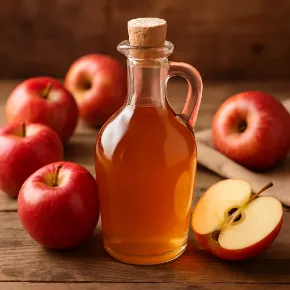
- start with a sugar-containing ingredient, such as apples, grapes or juice
- the sweet liquid begins to ferment
- it gradually becomes acidic
- when the process is complete, vinegar is formed
The acid is not added; it develops during fermentation. The process takes time. These vinegars are often 3-6%, sometimes up to 8-9%, rather than 70%.
Comparing one litre: what differs?
This distinction matters.
One litre of an acetic-acid solution
Usually water and acetic acid at the chosen concentration. Its taste tends to be sharp and straightforward.
One litre of naturally fermented vinegar
It also contains acetic acid, but the remaining liquid is more than water. Traces of the original ingredients and substances formed during fermentation affect aroma and flavour, sometimes making it taste gentler.
An honest qualification: this does not turn vinegar into medicine.
Vinegar and health: without myths
What is clear
- vinegar is an acidic food
- it can affect gastric acid secretion
- gastritis, ulcers or excess acidity may be aggravated
- concentrated vinegar is dangerous
Common but uncertain claims
Claims that vinegar “cures”, “detoxifies” or reliably lowers blood sugar or body weight are not established as general guarantees. Scientific findings are limited or mixed.
Treat vinegar as a food, not a treatment.
Why choose apple or grape vinegar?
Common reasons include:
- a gentler perceived taste
- less of a plain acid sensation
- pleasant flavour in salads and marinades
- better individual tolerance for some people
Is industrial vinegar bad?
No. Standardised products serve useful purposes in marinades and preserving, where acidity and consistency matter. For home canning, follow a tested recipe and use vinegar of known labelled acidity, not an unknown-strength homemade product.
When vinegar is used regularly in salads or diluted drinks, its origin and full composition matter alongside the percentage on the label. Using it “for health” does not remove its acidity or risks.
Conclusion
Vinegar is not inherently good or bad: products differ.
- 70% acetic acid is a concentrate requiring strict handling and dilution instructions
- table-strength acetic-acid solutions have a specified concentration
- naturally fermented vinegar develops from ingredients over time
Understanding these differences helps you choose vinegar realistically and use it for its intended purpose.