


Introduction
Honey is one of the oldest natural foods, enjoyed as a sweet treat and valued as a source of beneficial substances. But how is it made? How do bees turn flower nectar into thick, fragrant honey, and how does it reach our table?
In this article, we explore what natural honey is, how bees make it and the steps beekeepers take before it reaches your jar.
What is natural honey?
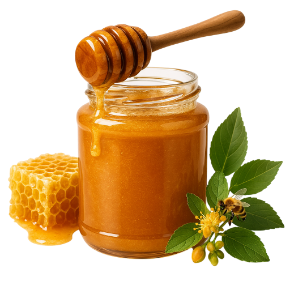
Natural honey is a product that bees make from flower nectar or honeydew, the sweet secretions of insects and plants. It should contain no artificial additives, added sugar or preservatives.
Key characteristics of genuine honey:
✔ An entirely natural composition, without added syrups, colourings or thickeners.
✔ Contains natural enzymes, vitamins, organic acids and minerals.
✔ Crystallises over time, except for certain varieties such as acacia or paliurus honey.
✔ Has a rich aroma and complex flavour characteristic of its variety.
How do bees make honey?
Honey production has several stages and depends on the coordinated work of the whole hive:
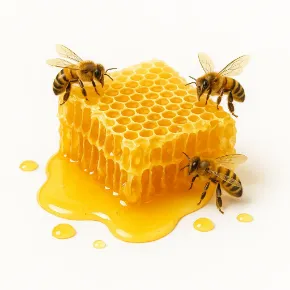
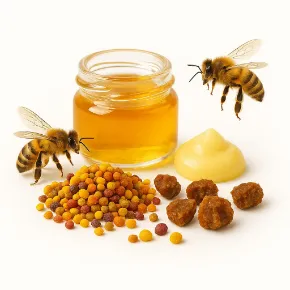
1️⃣ Collecting nectar. Forager bees fly from flower to flower, collecting nectar and carrying it in their honey stomachs.
2️⃣ Enzyme processing. Back in the hive, they pass the nectar to other bees, which process it repeatedly and add enzymes that break down complex sugars.
3️⃣ Evaporating moisture. Bees place the processed nectar in the comb and actively ventilate the hive, reducing moisture from 70% to 18-20%.
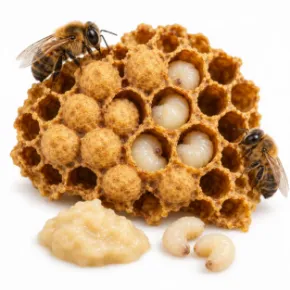
4️⃣ Honey ripening. When the honey reaches the right consistency, bees seal the cells with a thin layer of wax. It can keep for a very long time in this form.
How do beekeepers harvest honey?
Once honey has ripened, beekeepers remove it from the hive through several important steps:
- Removing the frames. The beekeeper selects frames with wax-capped comb, a sign that the honey is ripe, and removes them from the hive.
- Uncapping the comb. The wax cappings used by bees to seal the cells are removed.
- Extracting the honey. A honey extractor, a special centrifuge, draws the honey out of the comb.
- Straining. Honey is passed through fine mesh to remove wax particles and other physical impurities.
- Settling and bottling. Before bottling, honey is left to settle so that air bubbles can escape, then poured into jars.
Important! Good-quality natural honey is not heated above 40°C, as high temperatures damage its valuable enzymes and vitamins.
How can you recognise natural honey?
🔍 Aroma. Genuine honey has a rich floral or herbal aroma that depends on its origin.
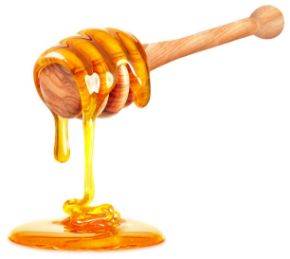
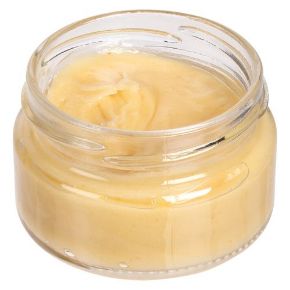
🍯 Consistency. Thick and viscous, forming a thread when poured that does not break immediately.
🎨 Colour. From almost clear to dark brown, depending on the variety.
👅 Taste. Natural honey can taste sweet, astringent or even slightly bitter, but should not leave the cloying sensation of sugar syrup.
💡 Tip: Most honey varieties crystallise within a few months of extraction. Some, such as acacia and paliurus honey, can remain liquid for several years. If ordinary blossom honey stays liquid for a long time, this may indicate heating or added syrups.
Conclusion
Natural honey is created by nature and the work of thousands of bees. Its distinctive composition and beneficial properties make it valuable for health, while harvesting it is a true art. When choosing honey, consider its authenticity and storage conditions to get the most benefit.
📢 What is your favourite honey variety? Have you tried fresh honey straight from the comb? Share your thoughts in the comments! 🐝🍯