


Introduction
Why might one honey cost 10 AZN per kilogram and another 50 AZN or more? These are illustrative prices, not current offers. A low price may prompt questions about dilution or imitation, but a high price does not always guarantee quality.
How do we judge what we pay for? What distinguishes expensive and less expensive honey, and how do we choose genuine honey? Let us explore.
Factor 1: Composition and production
1. Higher-priced honey: premium positioning or rare varieties
✔ It should be genuine and free from undeclared additions; price does not prove this.
✔ It contains varying amounts of enzymes, amino acids and trace minerals.
✔ Origin and production conditions should be traceable, not assumed from price.
✔ Some varieties stay liquid relatively long; crystallisation rate is not a quality grade.
💡 Examples often sold at premium prices:
✔ Mountain honey from Azerbaijan, including Zaqatala and Gakh - valued for floral character; mineral levels require analysis.
✔ Chestnut honey - appreciated for its distinctive flavour and availability.
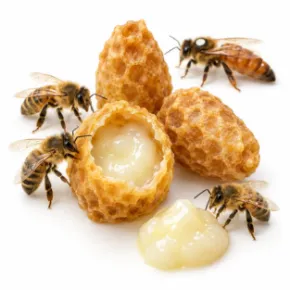
✔ Honey with royal jelly - a mixture whose added ingredients should be declared.
✔ Manuka honey from New Zealand - a distinctive floral type; particular activity claims need test evidence.
2. Lower-priced honey: production scale and cost differences
✔ A low price does not establish that syrup or starch was added.
✔ Processing can include warming; excessive or prolonged heat can reduce heat-sensitive compounds.
✔ It may come in plastic packaging; food-contact suitability and traceability matter more than material alone.
✔ It may crystallise quickly or remain liquid a long time; neither proves added sugar or heating.
💡 What can adulteration involve?
🔹 Addition of sugar syrup; taste alone cannot reliably identify it.
🔹 Fillers such as starch or chalk; iodine and vinegar cannot authenticate the whole honey.
🔹 Excessive heating, for example at 60°C for too long, can affect enzymes and texture; time matters as well as temperature.
Factor 2: Flavour and aroma
🔹 Higher-priced honey may have complex, bitter or acidic notes and a long finish, but these are not exclusive to expensive honey.
🔹 Lower-priced honey may taste simpler, but this is not reliable proof of adulteration.
🔹 Higher-priced honey may offer floral, herbal, woody or spicy notes.
🔹 Lower-priced honey can also be aromatic; price does not determine floral origin.
💡 Tip: If honey smells of caramel, ask about processing; aroma alone does not prove overheating.
Factor 3: Texture and crystallisation
✅ Genuine honey at any price:
✔ Thick honey may form a thread when poured; temperature and moisture affect this.
✔ Natural crystallisation can occur; acacia and Paliurus often crystallise slowly, rather than never crystallising.
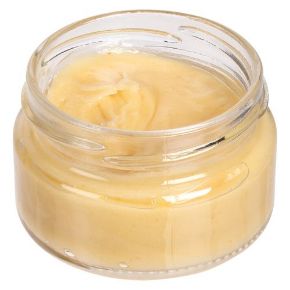
✔ Crystals may be fine, creamy or coarse, depending on composition and conditions.
❌ Points that deserve questions:
✔ Very runny honey may be warm or higher in water; this alone does not establish fraud.
✔ Honey may form large crystals naturally; this does not prove added sugar.
💡 How can you check?
Mixing a teaspoon of honey into warm water illustrates dissolving, but:
✅ Genuine honey can dissolve at different speeds.
❌ Fast dissolving does not prove an imitation.
Factor 4: Packaging and labels
✔ Higher-priced honey often comes in a glass jar with region, variety and harvest information.
✔ Lower-priced honey may come in plastic, but should still have clear origin and producer information.
💡 Tip: For example, compare 500 g and 1 kg glass jars by unit price, traceability and contents, not the jar alone.
Factor 5: Where is honey bought?
✔ Higher-priced honey may be found at apiaries, farmers’ markets and specialist shops.
✔ Lower-priced honey also appears in supermarkets and markets; judge the supplier rather than the channel alone.
💡 Note: At a honey fair in Baku, you may meet local beekeepers; check current event information and producer documents.
How can you avoid paying only for branding?
More expensive does not always mean better. Marketing, packaging and rarity can add to the price.
✅ How can you choose good honey at a fair price?
✔ Buy from reliable beekeepers.
✔ Check ingredients: plain honey should have no additions.
✔ Use aroma, texture and crystallisation to describe honey, not to certify authenticity.
✔ Understand the limits of home tests and seek traceability and suitable laboratory evidence when needed.
Conclusion
Price differences can reflect origin, production, quality information and presentation. Higher prices may reflect rare varieties or difficult production conditions, while low prices do not automatically mean adulteration or overheating. Buy from reliable producers and consider flavour, aroma, texture and traceability.
📢 Which honey do you prefer: mountain, chestnut or linden? Where do you buy it? Share in the comments! 🐝🍯