
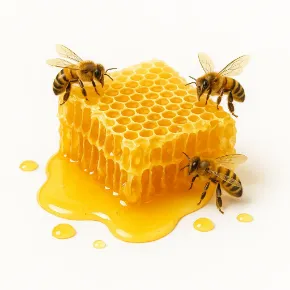
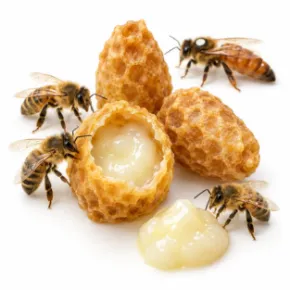
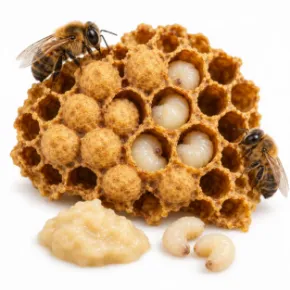


Honeycomb honey is served directly in the very wax comb in which the bees made it. It has not been extracted or filtered, but sealed by the bees inside natural wax cells. In effect, it is honey in its original state, without any human processing. The bees have enclosed this sweet product in natural packaging, isolating it completely from outside influences. That is why honeycomb is valued as an especially natural treat. Below, we look at its distinctive features and what buyers should consider to find genuine, good-quality honeycomb honey.
What is honeycomb honey, and why is it natural?
Honeycomb honey is sold together with the wax comb rather than as extracted honey. In the hive, bees place nectar in the cells, reduce it to the required moisture level and seal it with wax cappings. When the beekeeper removes and cuts the comb, the finished product is pieces of comb filled with ripe honey. It is considered more natural because it has not been processed: it has not been heated, filtered or mixed with other batches. Its original components remain: the comb itself is approximately half wax, propolis may account for about 10%, and there are pollen particles and enzymes produced by the bees. Essentially, this is honey straight from the hive, as the bees made it, without human intervention.
Why is honeycomb described as pristine? First, it reaches you in the same natural container in which it was stored in the hive: the bees' comb. Second, sealed comb provides natural protection: until the cappings are opened, the honey does not contact the air or become contaminated. This is thought to help honeycomb retain its freshness, aroma and beneficial properties longer than extracted honey. In addition, the high enzyme content and absence of heating prevent rapid crystallisation, so honey in the comb can remain liquid for quite a long time.
People also consume the comb wax itself. Small pieces of wax are completely harmless when chewed and can even be beneficial: wax is not digested, but acts as a natural adsorbent, clearing toxins from the intestines. Since the product is eaten raw, without pasteurisation or filtration, honeycomb is rightly regarded as one of the most natural products of beekeeping.
Advantages of honeycomb honey
- Minimal processing and an original state. Honeycomb has not been filtered, heated or mixed. It is honey just as the bees sealed it, with its enzymes and aromatic substances fully preserved.
- A richer composition. The comb contains wax, propolis and pollen alongside the honey. This increases the product's biological value and enhances its beneficial properties.
- Rich flavour and aroma. Honeycomb has a more pronounced, natural taste because its volatile substances remain intact. Propolis and wax add interesting notes.
- Slower crystallisation. Sealed honey crystallises more slowly than ordinary extracted honey. It stays liquid and fresh for longer.
- Benefits of chewing the comb. Wax massages the gums and cleans the mouth, while propolis has an antiseptic effect. This benefits the gums and oral mucosa.
- Long storage life. Honeycomb can be stored for years without losing quality if the comb remains sealed in a cool, dry place.
The presence of comb does not guarantee quality
Buyers often assume that honeycomb must be natural. That is not always so. Bees can seal not only nectar honey but also processed sugar syrup. Dishonest beekeepers feed their bees syrup during the nectar flow, and the bees store it in the comb. Such honey looks no different, yet contains practically no beneficial substances.
Quality also depends on where and how the comb was made. A frame taken from the brood nest may contain traces of brood or bee bread. Proper comb honey for sale should come from a honey super, where there is no brood.
Wax foundation and naturalness
Beekeepers use wax foundation to speed comb construction: thin wax sheets embossed with cell shapes. Foundation may be pure or contain impurities. Good foundation is made from additive-free wax and does not affect the honey. But paraffin, stearin or chemical residues in it can affect the product's taste and safety. The most natural option is comb built entirely by the bees without foundation.
Can honeycomb honey be adulterated?
Yes. If bees are fed syrup, they process it and seal it in the comb. This kind of 'honey' contains no enzymes, has a flat taste and minimal value. Sometimes syrup is even poured into comb by hand. Signs of adulteration include uniformly runny honey out of season, an overly sweet or caramel taste, a lack of aroma, and honey flowing out quickly when the comb is opened.
How to choose good-quality honeycomb
- Buy from trustworthy beekeepers or at farmers' markets. Ask which apiary the honey came from and whether the bees were fed sugar.
- At least 2/3 of the comb should be sealed. The wax should be light-coloured and free of a paraffin smell. Open cells are a sign of unripe honey.
- Taste it: the flavour should be complex, rather than simply cloyingly sweet. Good honey is aromatic, with floral and resinous notes.
- Check the packaging: it should be airtight and free of leaks. An alcoholic smell and bubbles are signs of fermentation.
- The price should not be too low: honeycomb costs more because the wax is lost to the beekeeper. A cheap product is often adulterated.
The Islamic approach to honesty and naturalness
Islam forbids deceiving buyers. The Prophet Muhammad, peace and blessings be upon him, said: 'Whoever deceives is not one of us.' Selling sugar syrup as honey is a form of deception. An honest beekeeper does not feed bees syrup during the season or pass adulterated products off as natural. Such producers deserve trust.
Pros and cons of honeycomb honey
- Pros: naturalness, enzymes, flavour, the benefits of wax and long storage life.
- Cons: a higher price than ordinary honey, possible adulteration, and discomfort for some people when chewing wax.
After considering these points, everyone can decide whether honeycomb deserves a place on their table. For many, the answer is clearly yes: it offers an unusual tasting experience, chewing a fragrant piece of comb, as well as a sense of contact with nature itself. The key is to buy thoughtfully from honest beekeepers. Then this sweet cube of nature can reveal all its honest, natural beauty.