


Introduction
Good packaging is often the first thing a buyer notices. It should:
✅ Preserve honey’s qualities by protecting it from air and moisture.
✅ Meet applicable safety standards.
✅ Be convenient to transport and store.
✅ Attract buyers’ attention.
How do you choose a container, and should it be glass or plastic? Let’s explore.
Step 1: Choose a honey container
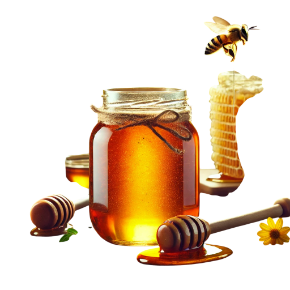
1. Glass: a premium option
✔ Food-grade glass does not react with honey.
✔ Preserves flavour and aroma for longer.
✔ Gives an impression of quality.
🚫 Drawbacks:
❌ Breaks easily.
❌ Costs more than plastic.
❌ Heavier to transport.
💡 Best suited to:
🔹 Premium honey and gift sets.
🔹 Shop and fair sales.
2. Plastic: a budget option
✔ Light and convenient to transport.
✔ Usually cheaper than glass.
✔ Less prone to breakage in transit.
🚫 Drawbacks:
❌ May absorb odours.
❌ Unsuitable containers can affect flavour over time.
❌ Not every plastic is suitable for food contact.
💡 Tip: Choose food-contact-approved plastic, such as suitable PET or PP containers and confirm suitability for honey and the intended storage conditions.
3. Wooden gift packaging: a premium presentation
✔ A natural material for presentation.
✔ Fits a natural-product concept.
✔ Suits souvenir and gift products.
🚫 Drawbacks:
❌ Higher cost.
❌ Can absorb moisture and aromas.
💡 Best suited to:
🔹 Gift sets.
🔹 Premium-market presentation.
Step 2: Packaging format
📌 Which format should you choose?
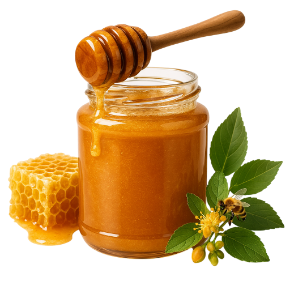
🔹 Classic jars - a standard, convenient storage option.
🔹 Stand-up pouches - a convenient travel format, if approved for the product.
🔹 Dispensing tubes - convenient for honey added to tea and food.
🔹 Honeycomb in a container - offered as a natural delicacy.
💡 A size example: Common jar sizes in Azerbaijan include 500 g and 1 kg; smaller European retail formats also include 250 g packs.
Step 3: Closing containers correctly
🚀 A tight seal is essential!
✔ Metal lids - a classic option for glass jars when suitable for food contact.
✔ Plastic lids - often cheaper, but durability varies.
✔ Waxed paper and ribbon - for outer gift presentation, not a substitute for a sealed food container.
✔ Wooden lids - a premium appearance; check that the closure seals properly.
💡 Tip: For export, check whether you need seals and tamper-evident labels to show package integrity.
Step 4: Design and labelling
✅ What information should you check for the label?
🔹 Product name: “Natural linden honey”.
🔹 Net weight: 500 g, 1 kg and so on.
🔹 Packing date and a validated shelf life, for example 2 years where appropriate for the product.
🔹 Country of origin, such as Azerbaijan.
🔹 Producer contact details.
🔹 Genuine quality certificates, where available.
💡 Important: For honey sales in Azerbaijan, confirm the applicable food safety, veterinary and technical requirements with the relevant authority.
Step 5: Transport packaging
📦 How can honey be protected during delivery?
✔ Partitioned cardboard boxes help protect glass jars.
✔ Bubble wrap for fragile packaging.
✔ Additional thermal protection when shipping to hot climates.
💡 Tip: For international shipping, account for the importing country’s packaging requirements.
Calculating packaging costs
📊 Illustrative prices per package in Azerbaijan - not current quotations:
- Glass jar (500 g) - from 0.80 AZN.
- Plastic container (500 g) - from 0.30 AZN.
- Label and lid - from 0.15 AZN.
- Cardboard box (10 jars) - from 3 AZN.
💰 Example total: packaging one 500 g jar is estimated from 1-1.2 AZN; obtain current supplier quotes.
💡 A marketing point: Good packaging can support perceived value, but no fixed price increase is guaranteed.
Conclusion
Good packaging provides product protection, customer convenience and a marketing tool. Choose quality materials, an attractive design and a reliable seal to help the product stand out and preserve its qualities.
📢 Which packaging do you prefer: glass, plastic or wood? Share your view in the comments! 🐝🍯