
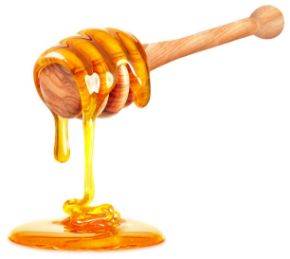
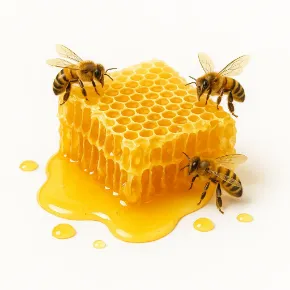
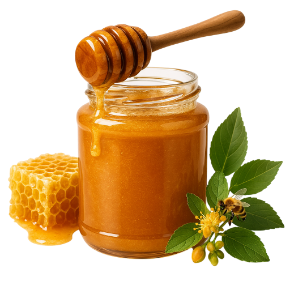
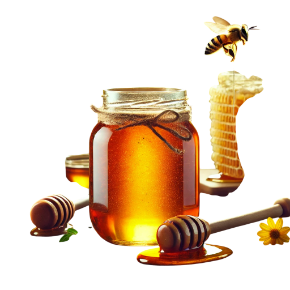



Buckwheat honey is one of the most recognisable and full-bodied honey varieties. Bees make it from buckwheat blossom, a resilient plant that flowers in midsummer and provides an abundant nectar harvest.
🌼 Origin and characteristics
🟤 Source: cultivated buckwheat flowers
📅 Harvest period: July to early August
📍 Regions: mainly plains and steppe areas where buckwheat is widely grown
👁️🗨️ Appearance and taste
🎨 Colour: dark amber to almost black
👃 Aroma: pronounced and spicy, with subtle woody notes
👅 Taste: full, astringent and characteristically bitter, with a long finish
Buckwheat honey has a taste and aroma that are hard to mistake. Its strong character is not for everyone, but it is appreciated by food lovers and connoisseurs.
🧪 Composition and beneficial qualities
🧬 Composition:
-
B vitamins
-
Iron, magnesium and iodine
-
Proteins, enzymes and amino acids
-
Flavonoids and antioxidants
💪 Beneficial qualities:
-
Supports the cardiovascular system
-
Used for support in anaemia (in connection with its iron content)
-
Helps ease inflammation and helps during colds
-
Supports digestion
-
Helps recovery after exertion and illness
🏥 Traditional uses
✅ When it is particularly valued:
-
During iron-deficiency anaemia
-
After operations and infections
-
For recovery of strength in older people
-
For people under heavy demands (sport, stress or physical work)
🍴 How to enjoy it
🥄 Suggested portion: 1-2 teaspoons in the morning on an empty stomach or with warm water
🥣 Add to porridge, cottage cheese or herbal tea
🚫 Do not add to drinks above +40°C, to preserve beneficial substances
⚠️ Precautions
-
Individual intolerance
-
A tendency to allergies
-
Diabetes: use cautiously and after consultation
🐝 Why choose buckwheat honey?
🌾 Monofloral - gathered from buckwheat fields
🌿 A natural antioxidant
🧠 Supports mental activity
🩸 Valued in traditional care for haemoglobin support
🔥 Has anti-inflammatory and antiseptic properties