


Introduction
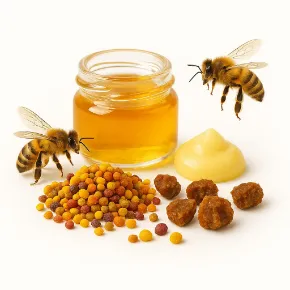
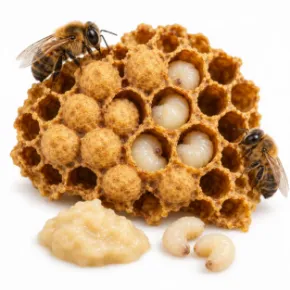
Bees are remarkable creatures behind natural honey. These small workers do an enormous job, turning flower nectar into a fragrant, nourishing food.
How exactly do bees make honey? How do they process nectar, and why can honey keep for years? This article follows the whole honey-making process from nectar collection to maturation in the comb.
How do bees make honey?
1. Gathering nectar
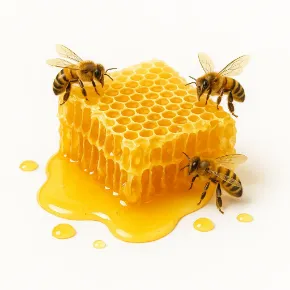
🐝 Forager bees fly from flower to flower, gathering sweet nectar in their honey crop.
📊 An interesting estimate: Producing 1 kg of honey can involve visits to up to 8 million flowers and flights totalling over 100,000 km!
2. Initial nectar processing
🔹 Back in the hive, foragers pass the nectar to house bees.
🔹 Bees add enzymes that break complex sugars down into fructose and glucose.
💡 Why does this matter? Enzymes contribute to honey’s keeping qualities and help protect it against bacteria.
3. Reducing moisture
🌬 Bees fan the comb with their wings to help honey mature. This evaporates excess water and thickens the honey.
📉 Nectar starts with around 70% water, while mature honey typically contains only 16-18%.
4. Sealing the comb
🔹 Once the honey is mature, bees seal the cells with wax caps.
🔹 In this form, and with suitable storage, it can keep for years while retaining its qualities.
🍯 Why does honey keep so well?
✅ It contains little water, limiting bacterial growth.
✅ Bee enzymes contribute to an antiseptic environment.
✅ Honey contains hydrogen peroxide, which has antimicrobial properties.
📜 A historical story: Accounts of Egyptian tombs often mention ancient honey and its remarkable keeping qualities.
How do beekeepers harvest honey?
Once the comb is sealed, beekeepers begin the harvest:
1️⃣ Remove the comb - select fully capped frames.
2️⃣ Uncap the cells - remove the wax caps with a special knife.
3️⃣ Extract the honey - a centrifugal extractor gently draws it out.
4️⃣ Filter and settle - strain out wax pieces and let the honey rest.
5️⃣ Fill the jars - the honey is ready to enjoy!
Remarkable facts about bees and honey
🐝 A hive can contain up to 80,000 bees!
🍯 One bee produces about 1/12 of a teaspoon of honey in its lifetime.
🌍 About 75% of food crop types benefit from animal pollination, including the work of bees.
🔬 Properly stored honey can keep for a very long time.
Conclusion
Honey-making is a complex, remarkable process in which every bee plays a part. Their work gives us a natural treat that can remain fresh and enjoyable for many years.
📢 Have you tasted fresh honey straight from the comb? Share your impressions in the comments! 🐝🍯