
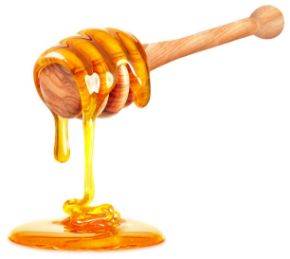
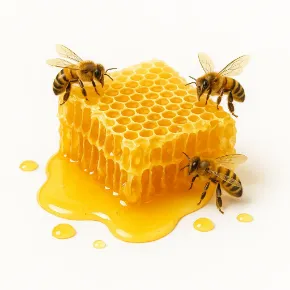
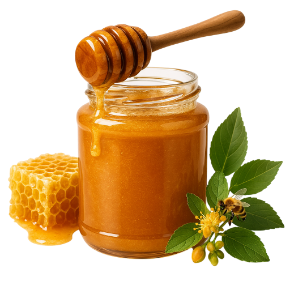
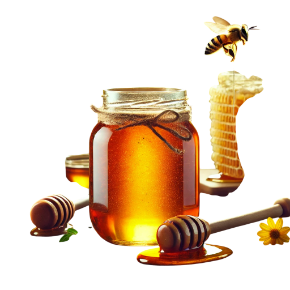
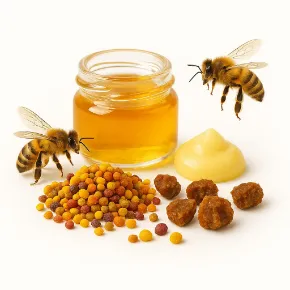
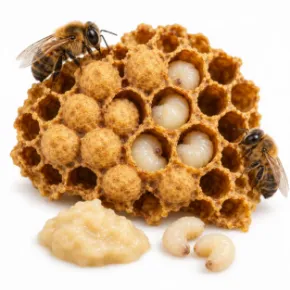


Meadow honey is a natural product collected by bees from many wild meadow herbs and flowers. Its distinctive feature is that it has no strictly fixed composition: each batch reflects the flora of its location and harvest period. That makes meadow honey particularly valuable, bringing together the richness of nature.
🌸 Origin and harvest
📍 Meadow honey comes from a mixture of plants: clover, chicory, cornflower, bedstraw, mint, St John’s wort, thyme and dozens of others.
📅 Harvesting runs from the second half of May to August, depending on the region and weather.
🐝 This honey is the result of bees visiting thousands of flowers to gather nectar from fragrant meadows and woodland edges.
👁️🗨️ Appearance and taste
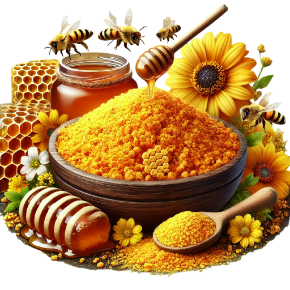
✨ Colour: light gold to rich amber, sometimes slightly cloudy because of the pollen composition.
👃 Aroma: rich, floral and herbal, with fresh notes of wildflowers.
👅 Taste: soft, delicate and balanced. It may be slightly sweet and spicy, with a little astringency or minty coolness.
💪 Beneficial properties
🛡️ Strengthens immunity and the body’s overall resistance
💤 Has a mild sedative effect and helps with insomnia
🔥 Reduces inflammation and speeds wound healing
🍽️ Improves digestion and appetite
🧠 Stimulates brain function and supports vitality
🍽️ Uses
☕ Ideal as a natural sweetener for tea and herbal infusions
🥣 Pairs well with cottage cheese, yoghurt and porridge
🍞 Suitable for toast, baking and desserts
🧴 Used in natural cosmetics, including masks and scrubs
⚠️ Characteristics
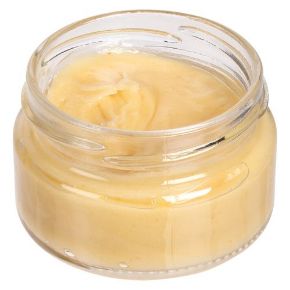
🟡 Crystallises quickly, a natural process that confirms its naturalness
🟢 Taste and aroma may differ with the region and harvest year
🚫 Not recommended for children under 1 or for people allergic to pollen
📦 Storage
🌡️ Temperature: +5°C to +20°C
🌑 Keep in a dark place away from direct sunlight
🚫 Do not refrigerate, as honey may absorb other odours