






Bees are not only striped: they are also covered in tiny hairs. Different parts of the body carry different kinds, including branched hairs that collect pollen and sensory structures on the antennae. Rather than assigning an unverified number of millions, it is more useful to explore what these hairs do. From an Islamic perspective, their remarkable structure is an invitation to reflect on Allah’s creation.
This article explains how hairs help bees collect pollen, keep clean, sense their surroundings and conserve heat.
🔸 Where are bee hairs found, and what do they do?
Hairs and specialised sensory structures occur on the head, eyes, antennae, mouthparts, thorax, legs and abdomen. The thorax is especially hairy. On a worker honeybee’s hind legs, stiff hairs fringe the pollen baskets; the basket surface itself is not a dense carpet of hair.
These structures perform different tasks. Some work like brushes or pollen traps; others are connected to sensory cells and respond to touch or movement. They should not all be treated as identical sensors.
🔸 Hairs as pollen-collecting tools
Electrical charge can help pollen move between a flower and a bee. This works alongside direct contact with the flower, rather than replacing it.
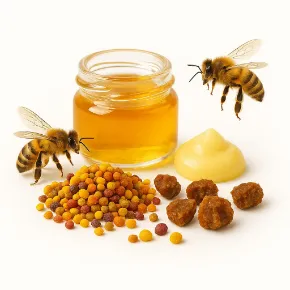
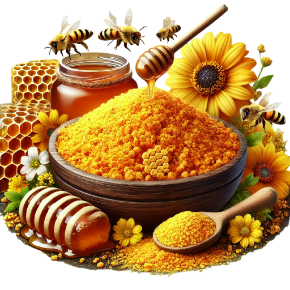
Branched body hairs catch pollen grains. The bee grooms itself with its legs and packs collected pollen into the baskets on its hind legs. The basket’s shape and surrounding hairs help retain the load during flight.
🔸 How hairs help conserve heat
🐝 Hairs provide some insulation, while flight muscles produce heat. This does not mean that a lone bee can survive at -50°C simply because of its coat. Winter survival depends on the colony, shelter, health and food reserves.
❄️ In cold weather, honeybees form a cluster and generate heat together. The core can be much warmer than the outside, but its temperature varies with conditions and brood rearing; +30°C is not a fixed winter guarantee. For believers, this cooperation offers another reason to reflect on Allah’s wisdom.
🔸 Hairs and cleanliness
Dust, pollen and other particles can settle on the hairs. Bees groom with their legs, clean their antennae and brush material away from their eyes. This helps keep sensory surfaces functional.
Honeybees even have hairs on their compound eyes. Research shows that their spacing helps with pollen capture and removal during grooming. It does not mean the eyes are always perfectly clean.
🔸 Hairs and sensory perception
Different sensory structures can detect signals such as:
-
touch;
-
air movement;
-
vibrations;
-
odours, through specialised antennal receptors;
-
and, in research on bumblebees, weak electric fields detected through hair movement.
Bees combine information from several senses to respond to their environment. Findings about electric-field detection in bumblebees should not be presented as proof that every hair on every honeybee performs the same task.
🔸 Hairs and communication in the hive
Touch, air movement and vibrations help bees exchange information. During a waggle dance, nearby bees use sensory structures, including their antennae, to follow the signalling bee.
Chemical signals also matter: bees recognise colony odours and pheromones through specialised receptors. Communication is a combined sensory system, not the work of body hairs alone.
🔸 Conclusion
From an Islamic perspective, the bee’s hairy body reflects the wisdom of the Creator. Its structures support pollen collection, grooming, insulation and sensing. Their real functions are remarkable without adding unverified counts or survival claims.
📖 The Qur’an describes the Lord guiding the bee to make homes, feed and follow the paths made easy for it. It speaks of a drink of different colours containing healing for people, as a sign for those who reflect. (Surah An-Nahl 16:68-69, meaning paraphrased).
🐝 Next time you see a bee on a flower, notice its tiny hairs: for a believer, even these small structures can inspire gratitude and wonder at Allah’s creation.