


Introduction
Honey can be adulterated with sugar syrups or other substances. However, simple kitchen tests cannot establish that a sample is genuine.
What can you learn about honey’s quality at home? The seven common checks below can illustrate texture or particular reactions, but none replaces traceability and appropriate laboratory analysis.
Check 1: Flow and texture
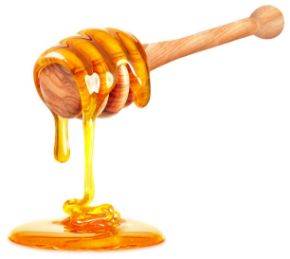
🔹 Take a teaspoon of honey and pour it slowly onto a plate.
✅ Genuine honey can form a thin thread and mound, depending on its temperature and moisture.
❌ Adulterated honey may also flow this way; dripping or spreading does not prove adulteration.
💡 What does it show? Viscosity depends on water content, temperature and crystallisation, not simply on the presence of enzymes.
Check 2: Dissolving in water
🔹 Mix 1 teaspoon of honey into a glass of warm water.
✅ Genuine honey may dissolve slowly or quickly, depending on temperature, stirring and texture.
❌ Adulterated honey may behave similarly; quick dissolving or water colour is not a reliable verdict.
💡 What does it show? Pollen and enzymes do not make dissolving speed a dependable authenticity test.
Check 3: Iodine and starch
🔹 A common demonstration uses a few drops of iodine.
✅ Honey without detectable starch may show no blue colour, but this does not establish authenticity.
❌ A starch-containing mixture can turn blue; the result is limited to this reaction.
💡 What does it show? Iodine reacts with starch, not with every possible adulterant. Do not eat a sample used in a chemical test.
Check 4: Vinegar and carbonates
🔹 Another common demonstration mixes a teaspoon of honey with water and adds a little vinegar.
✅ A sample without a visible reaction is not thereby proven genuine.
❌ A sample containing carbonate may fizz in acid, but fizzing alone does not identify its complete composition.
💡 What does it show? Chalk contains calcium carbonate, which can react with acid. This is not a general test for honey fraud.
Check 5: The burning-test myth
🔹 Do not dip a cotton swab in honey and try to set it alight; this creates a needless fire risk.
✅ Genuine honey is not authenticated by a swab burning or charring.
❌ Adulterated honey cannot be identified reliably by whether a flame catches or a sample hisses.
💡 What does it show? Burning depends on the wick, moisture and test conditions; it is not proof of honey’s origin.
Check 6: Paper towel absorption
🔹 Put a small drop of honey on a paper towel to observe spreading.
✅ Genuine honey may remain as a drop, but the paper and water content affect the result.
❌ Adulterated honey may also remain on the surface; a wet mark is not a diagnosis of fraud.
💡 What does it show? Absorption is an observation of texture and moisture, not a complete authenticity analysis.
Check 7: Flavour and aroma
✅ Genuine honey can have complex flavours, sometimes with a bitter note and lingering aftertaste.
❌ Adulterated honey may taste like syrup, but taste alone cannot reliably distinguish all adulteration.
💡 What does it show? Honey contains pollen, enzymes and organic acids, among other compounds; flavour also varies naturally by floral source.
Conclusion
At home, you can observe honey, but you cannot reliably prove authenticity using these simple checks. Traceability, a reliable producer and appropriate laboratory analysis provide a stronger basis for choosing a quality product.
📢 Which honey checks have you heard about? Share your experience in the comments, remembering their limitations. 🐝🍯