
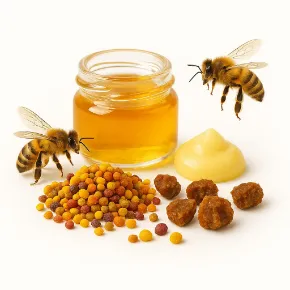


Honey is more than a sweet food. Its character reflects the climate, geography, season and plants around the hive. Why is one honey clear and amber while another is thick and dark brown? Why does one taste mild and almost creamy, and another bold, spicy or slightly bitter? Honey is a complex natural product.
Let us look at what shapes its colour and flavour, and why these can change over time.
🌸 1. The nectar source matters most
Different plants provide nectar with different compositions. For example:
-
Clover, linden and acacia often produce light, mild honey;
-
Buckwheat, chestnut and Paliurus can produce richer flavours and colours that vary by batch;
-
Mountain flowers give a range of colours and flavours depending on the floral mix.
Mineral and phenolic composition can influence colour, but darkness alone does not measure quality or nutritional value.
☀️ 2. Climate and season
Colour and flavour are influenced by:
-
temperature and humidity during flowering;
-
the duration of hot or rainy weather;
-
harvest time: spring and late-summer honeys may differ, depending on the plants in bloom.
🐝 3. The bees' work
Bees turn nectar into honey. Temperature, humidity in the hive and colony activity affect this process. As moisture is reduced during ripening, the honey becomes thicker; a darker colour is not an automatic sign of longer ripening.
📦 4. Storage conditions
Even carefully harvested honey can, over time:
-
darken through ageing and exposure to light;
-
change flavour when stored too warm;
-
lose some aroma if the jar is left open for a long time.
💡 Keep honey in a closed glass jar in a cool, dark place.
🔁 5. Natural changes over time
Honey continues to change slowly during storage:
-
its colour and flavour can develop;
-
enzyme activity and other chemical changes can continue; unwanted fermentation is a quality problem, not normal ripening;
-
its flavour may become different or more rounded.
💛 6. Crystallisation and its effects
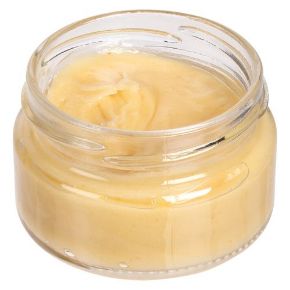
Crystallisation often makes honey look lighter.
The texture also changes how we perceive flavour, especially in honey made from several floral sources.
🧪 7. Human intervention
Excessive or prolonged heating can cause honey to:
-
become darker;
-
lose some of its characteristic flavour and aroma.
Producers may also blend honey varieties, changing their colour and taste.
❗ What if the colour or flavour changes sharply?
If a newly opened jar has a harsh flavour, chemical smell or unusual colour:
-
adulteration may be one possible cause;
-
poor storage, overheating or fermentation may be others.
Natural honey can change, but an unpleasant smell or taste deserves investigation.
Conclusion
Honey is a complex natural product. Its season, origin, flavour and character depend on many factors. Differences in colour and aroma can reflect flowers, climate and the bees' work. Changes alone do not prove authenticity; consider storage, traceability and quality information too.