


🌼 What is bee pollen, and why do bees need it?
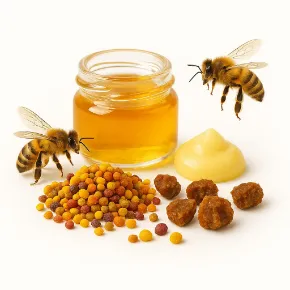
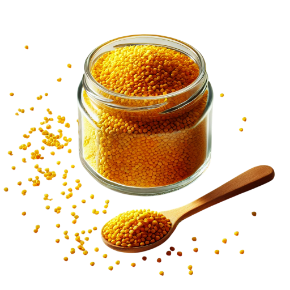
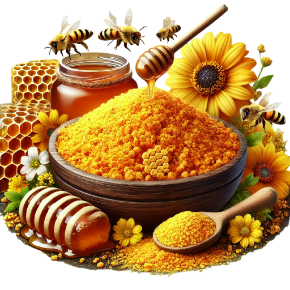
Bee pollen consists of tiny grains of flower pollen collected by bees and rolled into pellets.
🐝 For bees, it is the main source of protein and amino acids, essential for colony development and feeding the brood.
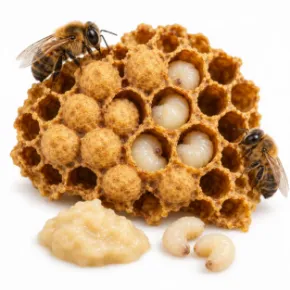
🍯 In the hive, pollen is packed into comb cells with a little honey and enzymes, producing bee bread.
⚠️ Without pollen, a colony cannot develop even when honey is plentiful. Collecting it is especially important in spring and early summer.
✈️ How bees collect pollen
-
A worker bee becomes covered in pollen while collecting nectar.
-
She brushes it off with her front legs and forms pellets.
-
She places the pellets in the pollen baskets on her hind legs.
-
She returns to the hive with two pellets, one on each hind leg.
-
The pollen is unloaded and either used immediately or turned into bee bread.
🧰 How beekeepers collect pollen
Modern beekeepers use pollen traps, screens fitted at the hive entrance:
🔸 As a pollen-laden bee passes through an opening, some of the pollen falls off.
🔸 Pollen collects in a tray, which is cleaned daily.
🔸 Pollen is not harvested every day, to avoid weakening the colony.
🔸 A strong colony can bring in 30-70 g per day.
🔸 Pollen is immediately moved to a dry, clean place for processing.
🌬 Processing and storage
-
Cleaning: sieving out debris, wax and impurities
-
Drying:
-
Up to 40°C, in a dryer or a ventilated room
-
❗ Over-dried pollen loses vitamins; damp pollen develops mould
-
-
Storage:
-
In glass jars or resealable zip bags
-
In a refrigerator at 0...+15°C
-
Shelf life: up to 1 year; mixed with honey: up to 2-3 years
-
🧬 Composition and beneficial properties
Bee pollen is a natural vitamin concentrate containing more than 250 active substances:
🔹 Up to 30% protein
🔹 All 20 amino acids
🔹 Vitamins: A, B1-B12, C, D, E and K
🔹 Minerals: calcium, magnesium, zinc and selenium
🔹 Enzymes and coenzymes
🔹 Flavonoids, polyphenols and carotenoids: 🌟 antioxidants
📌 Effects:
✅ General strengthening
✅ Immune modulation
✅ Anti-inflammatory
✅ Tonic
🩺 Conditions it can help with
-
Fatigue and overwork
-
Stress and weakened immunity
-
Anaemia and low haemoglobin
-
Digestive problems
-
Skin, hair and nail condition
-
Recovery after illness
🔹 For men: reproductive system support from zinc and phytosterols
🥄 How to take pollen
-
💊 Amount: 1-2 teaspoons per day, starting with ½ teaspoon
-
🕗 Take on an empty stomach or 30 minutes before a meal
-
🍯 May be mixed with honey
-
❌ Do not heat above 40°C
-
📆 Course: 3-6 weeks, then a break. Repeat 2-3 times a year.
🚫 Contraindications
⚠️ Possible restrictions:
-
Allergy to pollen or honey
-
Children under 1 year
-
Pregnancy and breastfeeding: only on professional advice
-
Use caution with diabetes
-
Serious liver or kidney disease: consult a doctor
✅ Summary
Bee pollen offers goodness in every pellet, collected by bees from flowers:
🌿 A natural source of proteins, vitamins and minerals
⚡ Boosts vitality and strengthens immunity
🛒 Buy pollen from trusted beekeepers and store it correctly to get the greatest benefit.