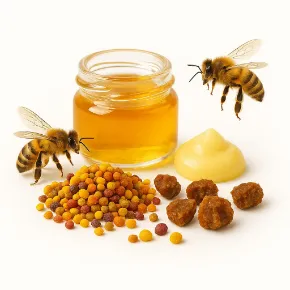
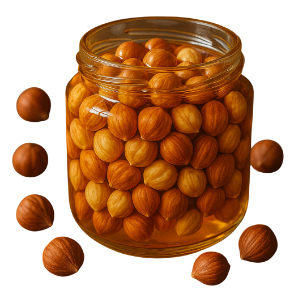
A detailed comparison of four honey formats: sold by weight, prepacked, with bee products and with nuts. Learn how packaging, ingredient information, allergies and storage affect your choice.
Honey before bed may help relaxation, improve sleep quality and ease evening coughs through its natural properties. It stabilises blood sugar and can replace unhealthy sweets. With diabetes, heartburn or allergies, however, taking honey at night requires caution. Moderation, timing and the way it is consumed are important.
Wax honeycomb is not only natural packaging for honey, but also a valuable product with antiseptic and strengthening properties. It is edible and benefits immunity, digestion and oral health.
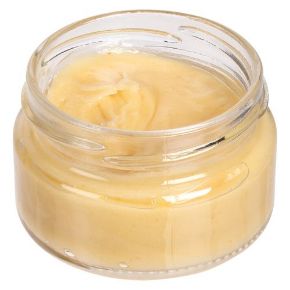
Creamed honey is natural honey with a soft, creamy texture created by whipping without heating or additives. It retains its beneficial properties while becoming easier to use: it spreads easily, does not run and stays soft for a long time. It comes plain or with natural ingredients such as berries, nuts, spices and bee products. A choice for children, food lovers and anyone who enjoys natural sweetness in a new form.
Bee hairs have many roles in collecting pollen, grooming, insulation and sensing. Explore their structure through biology and Islamic reflection, without confusing colony winter survival with an individual bee’s coat.
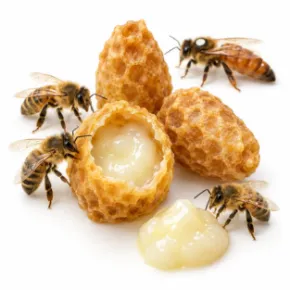
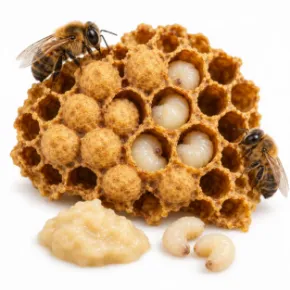
Royal jelly is a nurse-bee secretion; drone homogenate comes from drone brood. Compare their origins, composition and storage requirements without treating hormonal, muscle or rejuvenation claims as guaranteed effects.
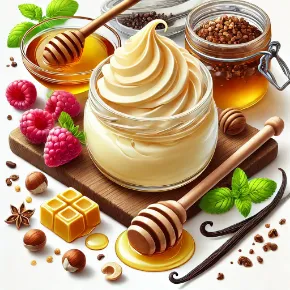
Honey soufflé is a delicate dessert made with natural honey, berries, nuts, cocoa and spices. Its whipped texture makes it ideal for spreading or simply eating by the spoonful. Delicious, colourful and natural, it appeals to children and adults alike. No refined sugar or preservatives, just honey and natural ingredients.
Brief use of a clean, intact food-grade stainless-steel spoon is suitable for honey. Learn where the metal-spoon myth came from and why material choice, hygiene and long-term storage are different questions.
Honey may temporarily ease some cough symptoms or soothe the throat in people over one year old. Learn its limits, practical serving ideas and why it must never be given to infants under one.
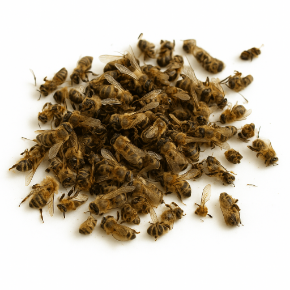
Bee podmor consists of dead bee bodies sometimes used in traditional medicine. Despite potential benefits, obtaining proper quality is difficult: bees may die from disease or chemicals, or remain in the hive for a long time. The only reliable method would be killing bees, which conflicts with ethical and religious principles. We therefore choose not to sell podmor, respecting bee life and Islamic principles.